Showing posts with label myth. Show all posts

Friday, January 17, 2014

When the Wolf Comes


Let me tell you about my disastrous December. One of my uncles died after a long, painful battle with cancer—the passing was a welcomed relief to him. Another uncle went to the hospital with sepsis following a surgery. A sister lost her apartment and had no place to go. My mother was scammed out of her entire life savings and was almost evicted. Obediently following Murphy’s Law, my car had a minor breakdown and my laundry machine burned out and filled the room with stinking smoke. (These mechanical troubles were certainly not emotional blows, but my bank account was already suffering after a month of disaster management.)

It never rains but it pours.

I’m sure we've all hit rough patches like that, where we wake up every morning wondering what fresh calamity awaits us that day. Eventually, I found myself becoming philosophical about the whole thing, and I took strength, as I often do, from literature and books.

This time around, I looked to Norse mythology. The Norse were a people who understood hard times, and they believed that even their gods were doomed to suffer and die. What’s more, their gods not only knew that they would eventually die but also the exact manner of their horrible, violent end. The carnage truly begins when Fenrir, the titanic wolf, appears in their hall to lead a pack of monsters to slay Thor, Odin, and all the rest.
Emil Doepler [PD US Public domain], via Wikimedia Commons
For all their pessimism about mortal existence in an uncaring universe, the ancient storytellers did not advocate giving up. Rather than waste time bemoaning their fate, the Norse gods prepare themselves by seeking loopholes in the prophecy, training to respond to the conflict, and enjoying what they had while they had it. Even though they knew they couldn't win, they were ready to fight hard.

My own troubled December was no Ragnarok—in fact, considering all the wonderful people I still have in my life, it doesn't even qualify as a dress rehearsal. The wolf has not yet come for me, but his distant howling still prompted me to question a few of my assumptions. I realized that many of my priorities had been a little out of whack. It made selecting a New Year’s resolution easy: I’m resolved to remember that if something doesn't help my family/friends, my fellow human beings, my health, or my writing, then it simply doesn't matter.
By Seney Natural History Association (Female Gray Wolf) [CC-BY-SA-2.0 (http://creativecommons.org/licenses/by-sa/2.0)], via Wikimedia Commons
Of these priorities, my gut tells me that the writing is the thing I neglected too much during 2013. It wasn't because I procrastinated, but rather was because I failed to fight hard enough to do what I believe I was put here to do. In 2014, I’m going to take inspiration from the Norse and fight the good fight.


I can't change the rules of mortality, but it is my privilege to defy it, even if only for a short time. Therefore, when the wolf comes, I’ll be waiting to hit him on the nose with at least one new novel. That’s my resolution for this year.

Be good, and dream crazy dreams,

Sechin Tower is a teacher, a table-top game designer, and the author of Mad Science Institute. You can read more about him and his books on SechinTower.com, Facebook, or Twitter.

Wednesday, January 15, 2014

Literary DNA


In Greek mythology a chimera is an animal that is part lion and part goat. Myth has other hybrids too, think of centaurs, both horse and man share the same DNA. Well, it appears that once again myth is a sign post to a larger truth. 

An article in last year’s Scientific American (I know, I know, I’m behind on my reading) explains how cells from a fetus can cross from the placenta into the mother.  And those cells remain in the mother, becoming part of her DNA, for the rest of her life. Apparently this is true even for babies who die before birth. The mother still carries part of them. 

So what does this have to do with writing, you ask? I’ve been thinking about our literary DNA and the way we carry the many parts of past inside us. Everyone does.  But for writers, their pasts become part of their literary DNA expressed in the themes and voice of their works.

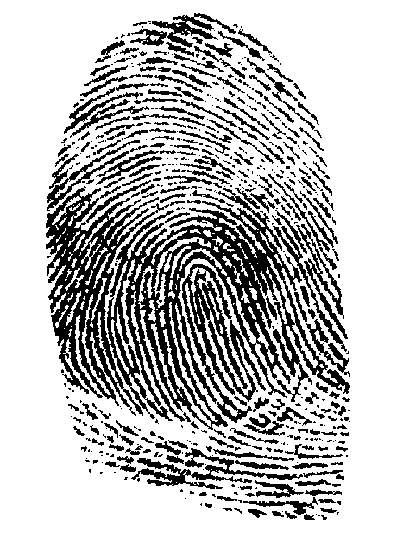
Hopefully writers don't write about the same event over and over. It’s usually much more subtle. Events leave fingerprints.  And those fingerprints are left on the stories we write. Think about themes: redemption, abandonment, the fragility of hope, how to save a life. While characters and events change  in each story, familiar themes run through them like DNA.  Why? Because they are drawn from the same deep well. 

Here’s an interesting fact about fetal cells found in the mother. They can be healing. They can actively fight off disease. I write to tell a story, but also to explore and wrestle with questions that I don’t have answers for. I tackle those questions over and over. And in the writing I have glimpses of truth, and I make connections and, at the best times, it is healing.


Wednesday, October 2, 2013

Shapeshifters


So I’ve got a book about to peek its head into the world. Now six months in advance, each character is jostling for recognition. Each wants star billing. And as I look over the odd assortment of people and creatures populating Beyond the Door, my gaze settles fondly on the Greenman. Half-man, half tree, his shape shifts with the seasons. But then I realize that he is not the only shifter in my story. There’s Herne the horned man and Gwydon the wolf who was once a story teller. Shapeshifters. We love them. We fear them. Mostly they fascinate us. Myth is peopled with creatures that change from one being to another. The gods of myth, like Odin or Zeus, often take the form of animals. And in some myths, like the story of the selkie or seal woman, animals become human.  One of the most famous myths is the story of Tam Lin who must be held in the arms of the woman who loves him as he changes from animal to animal.

Maybe we identify because we are all shapeshifters. We play one role in life and then another. But that answer is too easy. In shapeshifting you give up who you are to become something else. There is no promise of return. It is crossing a boundary. You have no guarantee of being the same again ever.  And you won’t. Shapeshifters are always marked. Think of Merlin teaching the young Arthur. In T.H. White’s version of the story, Arthur learns about the world through  the perspective of various animals. And it changes him. He is more insightful, but with insight we open ourselves to pain. We can sympathize with a hurting world, we empathize when we feel its pain. The selkie can reclaim her skin and return to the sea, but she leaves part of her heart on shore. Forever. The werewolf, knows the loneliness of night, the drive that compels him. He fears who he becomes. He is split between two worlds, between  two natures and wonders which one is his. It is a question we never escape, who am I? At times, we are afraid to learn the answer. And this is the territory of writers.  The deep place we must be willing to travel with each of our characters.

Neil Gaiman says,”… the best way to show people true things is from a direction that they had not imagined the truth coming.”  Today I share with you one of my poems in hopes that looking at a topic from a different direction will add a little bit of clarity. It first appeared in the Journal of Mythic Arts.

Shapeshifter
There is a moment
when the creature seems to disappear.
Nothing remains, but a quivering
in the air, the invisible finger
that runs your ridge of spine
Beauty and the Beast, by Anne Anderson, Wikipedia
My students ask if it hurts
to become another. We’ve read
the stories of humans furred,
flesh erupting to wings, or scales,
gill-gasp of transformation.
I tell them some are stories of pursuit,
a dove answered with a hawk,
a hare with greyhound as reply.
Pursuer and pursued, their deft dance
that ended once with a grain of corn,
swallowed by a hen who birthed
the storyteller, Taliesin.
But what the students want to know is pain.
That remembered moment when
quills pierce skin, fingernails bleed
to claws. Beyond the window
winter’s first kiss startles the grass with frost.
I tell them yes,
there is always pain at birth or when,
our tent of flesh opens
like a door to the sky,
and something more, you must
lean close to hear
the single note of joy.